Kenya’s President Ruto Urges Global Community to Sustain Haiti Security Mission
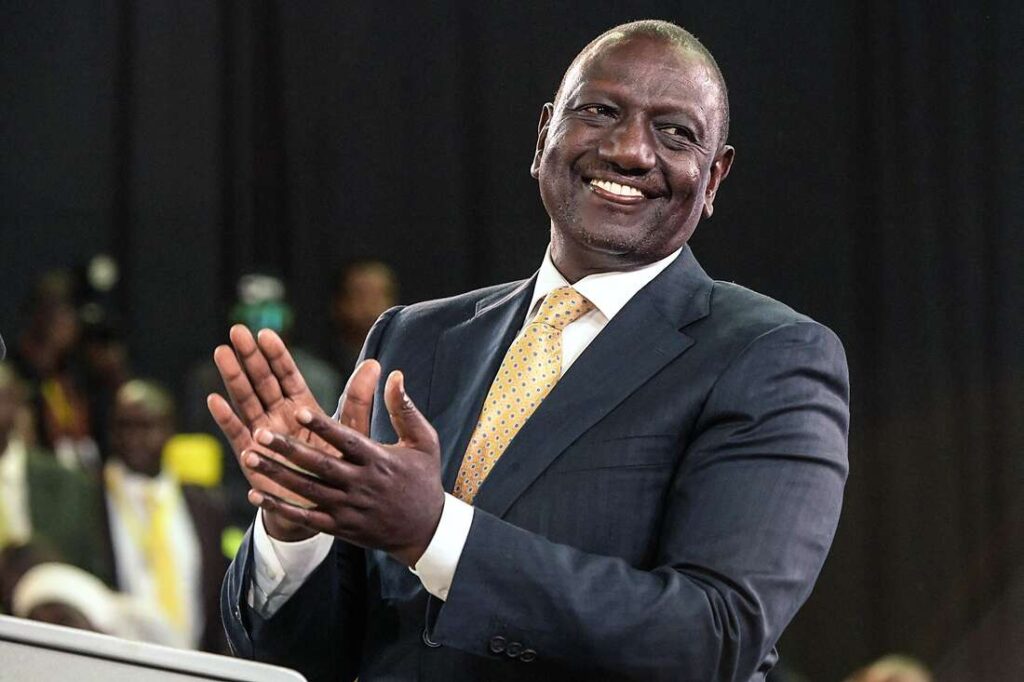
Nairobi, Kenya — Kenyan President William Ruto has issued a renewed call for sustained international support in addressing the escalating gang violence that continues to destabilize Haiti, emphasizing that the Caribbean nation’s security crisis requires long-term commitment from the global community. Speaking during recent diplomatic engagements, President Ruto highlighted the critical role of the Multinational Security Support (MSS) mission and stressed that premature withdrawal of international assistance could reverse hard-won gains in restoring order to the troubled nation.
The Kenyan leader’s appeal comes as Haiti grapples with unprecedented levels of gang-related violence that has displaced hundreds of thousands of residents, disrupted essential services, and created a humanitarian emergency in the Western Hemisphere’s poorest nation.
Kenya’s Leadership Role in Haiti Mission
Kenya has emerged as a principal contributor to the international effort to stabilize Haiti, deploying approximately 400 police officers as part of the United Nations-backed security mission that began operations in mid-2024. This represents the largest contingent among participating nations and demonstrates Kenya’s commitment to international peacekeeping operations despite facing security challenges within its own borders.
President Ruto’s administration volunteered to lead the mission following Haiti’s formal request for international assistance in October 2022, when armed gangs controlled an estimated 80 percent of the capital city, Port-au-Prince. The mission operates under a UN Security Council mandate but is not classified as a traditional peacekeeping operation, instead functioning as a multinational support force authorized to assist Haiti’s national police.
The Kenyan deployment faced initial domestic opposition and legal challenges, with critics questioning the use of national resources for overseas operations. However, the government successfully defended the mission as part of Kenya’s responsibility to contribute to global security and humanitarian efforts.
The Security Crisis in Haiti
Haiti’s descent into gang-controlled chaos accelerated following the assassination of President Jovenel Moïse in July 2021, creating a power vacuum that armed groups rapidly exploited. Criminal organizations have since engaged in widespread kidnapping, extortion, sexual violence, and territorial warfare that has paralyzed normal life for millions of Haitians.
The violence reached critical levels in early 2024 when coordinated gang attacks on police stations, prisons, and government infrastructure forced the resignation of Prime Minister Ariel Henry. Armed groups orchestrated mass prison breaks, releasing thousands of inmates and further emboldening criminal elements throughout the country.
Humanitarian organizations report that more than 580,000 Haitians have been internally displaced by violence, with many living in overcrowded temporary shelters lacking basic sanitation and healthcare access. The gang violence has also severely disrupted food distribution networks, contributing to acute malnutrition rates that particularly affect children and vulnerable populations.
Healthcare facilities have been repeatedly targeted or forced to close due to insecurity, leaving millions without access to essential medical services. Educational institutions have similarly shuttered across gang-controlled areas, denying hundreds of thousands of children their right to education and potentially creating long-term developmental consequences for an entire generation.
International Response and Challenges
The multinational security mission represents a complex diplomatic achievement that required extensive negotiations among UN member states. Beyond Kenya’s substantial police contingent, other contributing nations include the Bahamas, Belize, Benfica, Jamaica, and several Central American countries, though many pledged deployments have materialized more slowly than originally anticipated.
The mission operates with a budget funded through voluntary contributions rather than the UN’s assessed peacekeeping budget, creating ongoing financial sustainability concerns. President Ruto’s calls for continued support implicitly acknowledge these funding challenges and the need for predictable, long-term resource commitments from international donors.
Operational challenges facing the mission include the highly urbanized nature of gang violence in Port-au-Prince, the sophisticated weapons arsenals controlled by criminal organizations, and the deeply entrenched corruption that has historically undermined Haiti’s institutions. International forces must navigate complex terrain where distinguishing civilians from gang members proves difficult and where criminal networks maintain extensive intelligence capabilities.
Human rights organizations have emphasized the importance of ensuring that international security operations comply with international law and respect civilian protections, particularly given Haiti’s troubled history with foreign interventions that have sometimes exacerbated rather than resolved underlying problems.
Strategic Importance of Sustained Engagement
President Ruto’s emphasis on sustained international engagement reflects an understanding that security interventions require extended timeframes to achieve lasting results. Haiti’s institutional weaknesses developed over decades and cannot be reversed through short-term deployments, regardless of how well-resourced or professionally executed.
The Kenyan president has argued that premature mission withdrawal would likely result in rapid deterioration of security conditions, potentially necessitating more costly and complex interventions in the future. This perspective aligns with academic research on post-conflict stabilization, which consistently demonstrates that sustainable peace requires multi-year commitments to institution-building, economic development, and security sector reform.
Beyond immediate security operations, international support must address root causes including chronic poverty, political instability, judicial system dysfunction, and the illicit weapons trafficking that arms gang organizations. President Ruto has indicated that Kenya views its role as extending beyond policing to include training and capacity-building for Haiti’s security institutions.
The mission’s success or failure carries implications beyond Haiti’s borders. Caribbean regional organizations have expressed concern that instability in Haiti could generate refugee flows, facilitate transnational criminal networks, and destabilize neighboring countries. The international community’s response to Haiti therefore serves as a test case for collective security mechanisms in addressing non-traditional threats.
Regional and International Reactions
Caribbean Community (CARICOM) member states have generally supported the international security mission while emphasizing that Haitian-led political solutions must accompany security interventions. Regional leaders have called for parallel efforts to establish inclusive governance structures that can address the political dimensions of Haiti’s crisis.
The United States, as Haiti’s nearest major power and primary financial contributor to the security mission, has endorsed President Ruto’s calls for sustained engagement. American officials have acknowledged that security stabilization represents only one component of Haiti’s recovery and have pledged continued diplomatic and economic support.
However, some international observers have expressed skepticism about the mission’s long-term viability without a clearer political roadmap for Haiti’s future. Questions remain about how international forces will eventually transition responsibilities to Haitian security institutions and under what conditions withdrawal would become appropriate.
Human rights advocacy groups have emphasized the importance of ensuring accountability mechanisms for both international forces and Haitian security personnel, particularly given the country’s history of security force abuses. These organizations have called for robust oversight and transparent reporting on mission operations.
Economic Dimensions of the Crisis
Haiti’s security crisis has severely compounded existing economic challenges, with gang violence disrupting commerce, tourism, and foreign investment. The World Bank estimates that Haiti’s economy contracted significantly in recent years, with poverty rates increasing and formal employment opportunities declining.
International financial institutions have indicated that economic recovery cannot proceed without substantial improvements in security conditions. President Ruto’s appeals for sustained international support implicitly recognize that economic stabilization and security operations must proceed in tandem for either to succeed.
The gang violence has also disrupted Haiti’s already fragile infrastructure, with armed groups controlling strategic roads, ports, and fuel distribution networks. This criminal control over economic chokepoints enables extortion that increases costs for basic goods and services, further impoverishing ordinary Haitians.
Future Outlook and Conclusion
President Ruto’s call for continued international support highlights the complex, long-term nature of Haiti’s stabilization challenge. While the multinational security mission has achieved some tactical successes in reducing gang control over certain areas, sustainable peace will require years of coordinated international engagement addressing security, governance, economic, and social dimensions simultaneously.
The coming months will prove critical in determining whether international resolve remains sufficient to see the mission through inevitable challenges. Haiti’s transitional government faces the daunting task of organizing elections, reforming institutions, and rebuilding public trust while security operations continue.
Kenya’s leadership role in this mission reflects President Ruto’s broader foreign policy vision of positioning his nation as a responsible global actor contributing to international peace and security. The mission’s success or failure will influence Kenya’s international standing and could affect future multilateral security cooperation mechanisms.
For Haiti, the stakes could not be higher. Millions of ordinary Haitians depend on the international community’s sustained commitment to help break the cycle of violence and instability that has plagued their nation for far too long. President Ruto’s appeal serves as a reminder that addressing complex humanitarian and security crises requires patience, resources, and unwavering international solidarity.