
A Tribute to a Dedicated Police Officer and Scholar
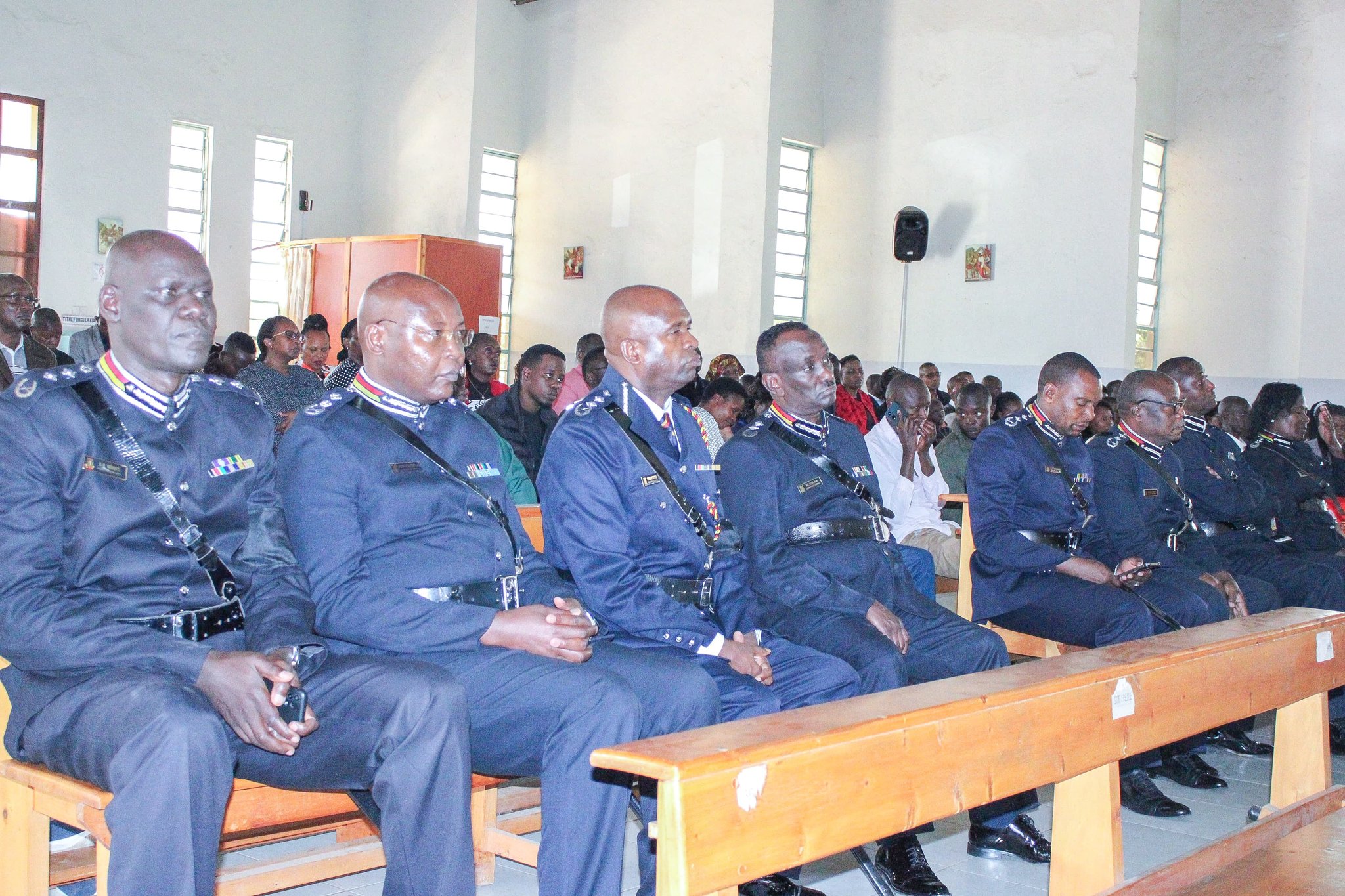
The National Police Service (NPS) gathered on Thursday to pay its final respects to the late Assistant Inspector General (AIG) Paul Kiprono Langat at a solemn Requiem Mass held at the Donbosco Catholic Chapel, located within Uhuru Camp in Nairobi. The distinguished law enforcement officer, who passed away on Wednesday, September 24th, 2025, after battling a prolonged illness, was remembered as a stalwart of the service and a man of exceptional integrity. The service brought together senior police leadership, family members, and colleagues to celebrate the life and legacy of one of Kenya’s respected law enforcement figures.
Background: Understanding AIG Paul Langat’s Career
AIG Paul Kiprono Langat held a distinguished position within Kenya’s National Police Service, earning recognition as both a dedicated police officer and an accomplished academic. Throughout his career in law enforcement, Langat demonstrated a commitment to excellence and professionalism that earned him respect across the police fraternity and beyond. His dual reputation as a gallant officer and scholarly individual set him apart in an institution where he contributed significantly to the development of policing practices in Kenya.
Before his passing, Langat had become increasingly recognized for his intellectual contributions to the field of law enforcement, combining his practical experience with scholarly pursuits. This unique combination of skills made him a valuable resource within the National Police Service, where he influenced policy discussions and mentored younger officers entering the force. His colleagues and superiors consistently acknowledged his contributions to institutional development and professional growth within the service.
The Requiem Mass: A Day of Remembrance

The Requiem Mass, presided over by the Principal Chaplain, Father Jeremy Mwenda, served as a formal ceremony to honor Langat’s memory and provide spiritual comfort to his bereaved family and professional colleagues. The chapel setting, steeped in solemnity and tradition, provided an appropriate venue for members of the National Police Service to gather and reflect on the life of their departed colleague. Throughout the ceremony, speakers shared personal anecdotes and professional tributes that illuminated Langat’s character and contributions to policing in Kenya.
The presence of high-ranking police officials underscored the significance of Langat’s role within the institution. The Inspector General of Police, Mr. Douglas Kanja, was represented by the Principal Deputy to the Deputy Inspector General (DIG-KPS), Mr. Patrick Tito, who held the rank of Senior Assistant Inspector General (SAIG). The attendance of numerous senior officers demonstrated the respect and esteem in which Langat was held throughout the police hierarchy.
Tributes and Eulogies: Remembering a Man of Integrity
During the service, multiple speakers took the opportunity to reflect on different aspects of Langat’s life and career. Mr. Patrick Tito, representing the Inspector General of Police, eulogized Langat as a stalwart of the National Police Service whose passing has created a significant void within the police fraternity. His remarks emphasized not only Langat’s professional accomplishments but also the personal qualities that defined his character and leadership style.https://x.com/NPSOfficial_KE/status/1976628094615113788?t=Elr1qvaBFeboSzMhubbM6Q&s=19
Dr. Vincent Makokha, the Director of Chaplaincy-KPS and a close personal friend of the deceased, offered particularly poignant remarks during the ceremony. He hailed Langat as a great academician and urged the family to find solace in their faith during this challenging period. Dr. Makokha’s eulogy highlighted the profound friendship that existed between the two officers and the respect Makokha held for Langat’s intellectual contributions to the service.
Speaking on behalf of the Langat family, Mr. Denis Rono, the son of the deceased, delivered an emotional tribute that painted a picture of his father as a person of exceptional character. He described AIG Langat as a man of great integrity, honesty, and wisdom—qualities that had defined his personal relationships as well as his professional career. Mr. Rono also extended gratitude to the National Police Service and friends for their support during what he acknowledged as a difficult time for the family.
Senior Police Leadership in Attendance

The high-profile attendance at the ceremony reflected the importance of AIG Langat within the National Police Service hierarchy. In addition to the Principal Deputy to the DIG-KPS, the event was attended by several other senior officers holding significant positions within the police structure. Mr. William Yiampoy, the KPS Director of Reforms, attended the service, as did Mr. Nyale Munga, the Commandant of the National Police Service College Main Campus. Both officers contribute significantly to the institutional development and training functions of the police service.
Ms. Ruth Kithuka Ndinda, the Deputy Commandant of Special Protection Group (SGB) and VIP Protection, also attended, alongside Mr. James Mwaniki, the KPS Director of Planning. The presence of these senior administrators highlighted the cross-functional impact that Langat had maintained throughout his career in various capacities. Additionally, Dr. Cyprian Kavivya attended as a representative of Kenyatta University, suggesting that Langat may have maintained academic connections and contributed to scholarly discourse beyond his primary police duties.
Planning the Final Farewell
Following the requiem mass, arrangements were made for AIG Langat to be laid to rest in his home village on Saturday, October 11th, 2025. The burial ceremony would take place in Matipso Village, located in Itembe Sub-County, within Bomet County—an indication that Langat maintained strong ties to his ancestral home throughout his life and career. The decision to conduct the funeral in his rural hometown reflects common cultural practices in Kenya, where individuals often return to their birthplaces for final burial, regardless of where they spent their professional lives.
This final journey home represents a significant moment for the Langat family to gather, mourn collectively, and celebrate the life of their patriarch with extended family members and community members who knew him. The transition from the formal, institutional setting of the requiem mass to the intimate, community-based funeral ceremony illustrates the multiple dimensions of Langat’s life and the various communities to which he belonged.
The Impact of Loss on the National Police Service

The passing of AIG Paul Langat represents a meaningful loss for the National Police Service at a time when the institution continues to navigate various reforms and challenges. His contributions as both a police officer and an intellectual resource had made him an important figure in discussions surrounding professional development, training standards, and institutional policy. The departure of such experienced personnel often creates operational and strategic gaps within large organizations.
The National Police Service has, in recent years, undertaken significant reform initiatives aimed at improving public confidence, professional standards, and operational effectiveness. Officers like Langat, who combined practical experience with scholarly understanding of policing practices, have been instrumental in bridging the gap between theoretical best practices and on-ground implementation. Their absence raises questions about succession planning and the development of the next generation of police leadership.
Institutional Continuity and Legacy
Despite the immediate sense of loss felt by his colleagues and the police institution, the legacy that AIG Langat leaves behind will likely influence the direction of police development in Kenya. His emphasis on intellectual rigor, professional integrity, and ethical conduct serves as a model for officers who knew him personally and those who will learn about his contributions through institutional memory and documentation. Organizations often undergo periods of reflection and renewal following the departure of significant figures, and the National Police Service may well use this moment to reassess its commitment to values that Langat embodied.
The attendance of representatives from Kenyatta University at the funeral ceremony suggests that academic institutions have recognized the value of developing closer partnerships with law enforcement agencies. Such collaborations can lead to better-informed policing policies, more rigorous training methodologies, and a more professional officer corps that combines practical experience with theoretical knowledge. Langat appears to have been a bridge-builder in this regard, and his influence may continue even after his passing.
Remembering Excellence in Public Service

As the National Police Service mourns the loss of AIG Paul Langat, the broader public should recognize the contributions that dedicated police officers make to national security and public safety. While police work can be challenging and sometimes controversial, individuals like Langat represent the professional, ethical side of law enforcement—officers who strive for excellence, maintain integrity, and seek to improve their institutions from within. His commitment to scholarship and continuous learning demonstrates that public service can encompass intellectual growth and professional development alongside operational duties.
The qualities attributed to Langat—integrity, honesty, wisdom, and scholastic achievement—represent ideals that should be cultivated within law enforcement and indeed throughout the civil service more broadly. In a context where public institutions sometimes struggle with credibility and public confidence, the example set by officers who prioritize professionalism and ethical conduct provides a counterbalance and a reminder of the best potential of public service institutions.
Looking Forward: The Future of Police Leadership Development
The loss of experienced officers like AIG Langat raises important questions about talent development and succession planning within the National Police Service. As the police institution continues its transformation and reform agenda, it must ensure that the lessons learned from senior figures are captured and transmitted to the next generation of leaders. Mentorship programs, institutional documentation of best practices, and deliberate efforts to develop talent from within can help mitigate the impact of such losses.
The presence of representatives from educational institutions at Langat’s funeral may also signal an opportunity for strengthened collaboration between the police service and universities. Such partnerships could include regular seminars, research initiatives, and curriculum development programs that ensure police training remains current and grounded in evidence-based practices. In this way, Langat’s legacy could continue to influence police professionalism even after his death.
Conclusion: A Life of Service Honored
The Requiem Mass held at Uhuru Camp on Thursday provided a fitting tribute to the life and career of AIG Paul Kiprono Langat, bringing together colleagues, family, and representatives of institutions with which he maintained connections throughout his life. His passing marks the end of a significant chapter in the history of Kenya’s National Police Service, particularly for those sections of the organization focused on training, reform, and professional development. The eulogies delivered during the service painted a picture of a man who approached his duties with dedication, who combined practical experience with intellectual rigor, and who maintained the highest standards of personal integrity.
As AIG Langat is laid to rest in his home village of Matipso, his family, colleagues, and the broader police fraternity can reflect on the meaningful contributions he made to law enforcement in Kenya. The principles he embodied—professionalism, integrity, scholarly pursuit, and dedication to institutional excellence—represent values that should continue to guide the National Police Service as it navigates ongoing reforms and developments. His legacy will likely continue to influence policing practices and professional standards for years to come, a fitting tribute to a life dedicated to public service and institutional excellence.
For more context on institutional developments in Kenya, you can explore our Economy section to understand the broader economic and institutional landscape, or learn more about our coverage on our About Us page. For updates on similar news stories, return to our home page and latest posts.


