National Police Service Receives Fallen Officer at JKIA Following Tragic Road Accident During UN Peacekeeping Mission

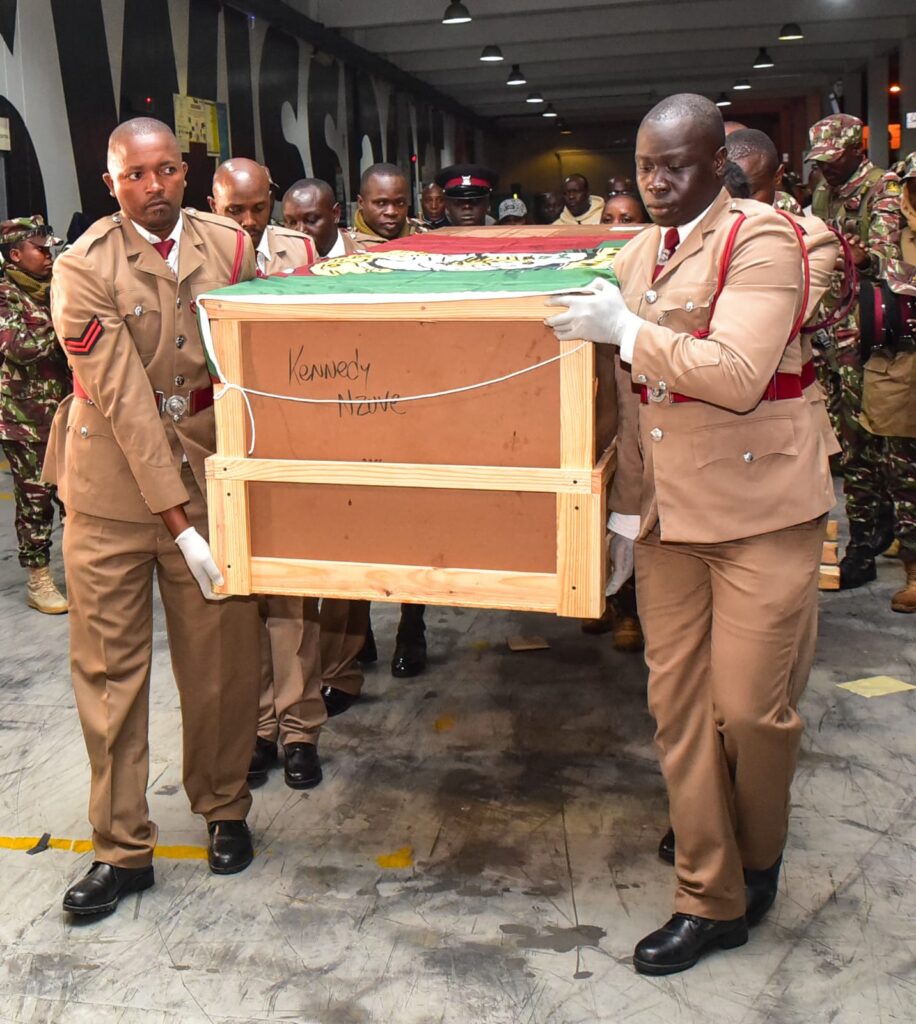
The National Police Service of Kenya received the body of Corporal Kennedy Mutuku Nzuve at Jomo Kenyatta International Airport on September 26, 2025, following his tragic death during a United Nations peacekeeping mission in Haiti. The solemn ceremony marked the homecoming of an officer who made the ultimate sacrifice while serving his country in international peacekeeping efforts.
Corporal Nzuve lost his life on September 1, 2025, in a road traffic accident while deployed with the Multinational Security Support Mission (MSSM) in Haiti. The 25-day gap between his death and repatriation reflects the complex logistical arrangements required for returning fallen peacekeepers from international missions.
Details of the Repatriation Ceremony
The body of the fallen officer was received by senior officials from the National Police Service fraternity, led by the Commandant of the National Police College Embakasi ‘A’ Campus, Mr. Isaac Alimaa, SAIG. The ceremony took place yesterday evening at Kenya’s main international airport, providing a dignified reception for the deceased officer.
Family members, including the officer’s mother, Mrs. Serah Nzuve, were present during the solemn occasion. Their presence underscored the personal tragedy behind the professional loss, as they welcomed their son’s body back to Kenyan soil after his service abroad.
The formal reception ceremony demonstrated the National Police Service’s commitment to honoring officers who die in the line of duty, particularly those serving in challenging international assignments. Such ceremonies serve both to provide closure for families and to recognize the sacrifice made by officers serving beyond Kenya’s borders.

Background on the Haiti Mission
The Multinational Security Support Mission (MSSM) in Haiti represents a significant international effort to restore stability in the Caribbean nation. Kenya has been a major contributor to this mission, deploying police officers to support peacekeeping and security operations in Haiti, which has been experiencing ongoing political and social instability.
Kenyan police officers participating in the MSSM face numerous challenges, including difficult working conditions, security threats, and infrastructure limitations. The mission requires officers to operate in an unfamiliar environment while maintaining professional standards and contributing to international peace efforts.
Road traffic accidents represent one of the significant risks faced by peacekeeping personnel in Haiti, where infrastructure conditions and traffic management systems may differ substantially from those in contributing countries. The loss of Corporal Nzuve highlights these operational risks that peacekeepers encounter during their deployments.
Official Response and Support Measures
The National Police Service has expressed its deepest condolences to the family, friends, and colleagues of the fallen officer. In their official statement, the service assured the bereaved of unwavering support during this period of profound sorrow, demonstrating institutional commitment to caring for the families of officers who die in service.
Following the airport reception, arrangements were made for the body to be transferred to Chiromo Mortuary for preservation. This step in the process ensures proper handling of the remains while burial arrangements are finalized. The National Police Service indicated that burial arrangements would be communicated at a later date, allowing time for proper planning and family consultation.
The presence of high-ranking officials at the reception ceremony reflects the importance the National Police Service places on honoring fallen officers. Such institutional support serves to acknowledge the sacrifice made by officers and their families while maintaining morale among serving personnel.

High-Level Attendance at Reception
The reception ceremony attracted significant official attendance, demonstrating the institutional importance placed on honoring fallen officers. Present at the ceremony were several senior officials from Kenya’s security and administrative sectors.
The Commandant of the Recce Squad (RDU), Mr. Aggrey Shamala, AIG, attended the ceremony, highlighting the inter-unit solidarity within Kenya’s security forces. His presence emphasized the shared commitment to honoring colleagues who die in service, regardless of their specific unit or assignment.
Medical and administrative leadership was represented by the Director of Medical Services for the Administration Police Service (APS), Madam Lilian Kanini, AIG. Her attendance underscored the comprehensive institutional response to officer casualties and the importance of medical services in supporting both active and fallen officers.
The Chief of Staff for the APS, Mr. Haron Nthiga, AIG, also participated in the ceremony. Administrative leadership attendance demonstrates the coordination between different branches of Kenya’s security services in honoring fallen colleagues.
The NPS Spokesperson, Mr. Muchiri Nyaga, AIG, was present to ensure proper communication and media relations regarding the ceremony. His participation reflects the service’s commitment to transparency and proper public communication about officer casualties.
Implications for Future Peacekeeping Operations
The death of Corporal Nzuve raises important questions about risk management and officer safety in international peacekeeping missions. Kenya’s continued participation in such missions requires careful consideration of safety protocols and risk mitigation measures to protect deployed personnel.
International peacekeeping missions, while crucial for global stability, inherently involve risks that may not be present in domestic policing operations. The loss of Corporal Nzuve serves as a reminder of these risks and the need for comprehensive preparation and support for officers undertaking such assignments.
The incident may prompt reviews of safety procedures and training programs for officers deployed to international missions. Such reviews could include enhanced driver training, vehicle safety protocols, and emergency response procedures specific to the operating environment in Haiti.
Support for Peacekeeping Families
The death of an officer during international service highlights the need for comprehensive support systems for families of deployed personnel. The National Police Service’s commitment to supporting the bereaved family demonstrates institutional recognition of this responsibility.
Family support programs for peacekeeping personnel may need enhancement to address the unique challenges faced by those whose relatives serve in distant and potentially dangerous assignments. Such programs could include regular communication protocols, emergency support procedures, and repatriation assistance.
The presence of Mrs. Serah Nzuve at the reception ceremony illustrates the personal impact of peacekeeping service on officers’ families. Her participation in welcoming her son’s body home provides a human face to the institutional process of honoring fallen officers.
Conclusion and Future Developments
The repatriation of Corporal Kennedy Mutuku Nzuve marks a solemn moment for the National Police Service and highlights both the contributions and risks associated with international peacekeeping service. His death serves as a reminder of the sacrifices made by Kenyan officers serving in challenging international environments.
The comprehensive institutional response, including high-level official attendance at the reception ceremony, demonstrates the National Police Service’s commitment to honoring fallen officers and supporting their families. This response sets important precedents for how such tragic events are handled in the future.
As burial arrangements are finalized and communicated, the focus will likely shift to ensuring proper memorial services and ongoing support for the officer’s family. The National Police Service’s handling of this situation will be closely observed by serving officers and their families, making institutional support particularly important.
The incident may also contribute to ongoing discussions about safety measures and support systems for officers deployed on international missions, potentially leading to enhanced protocols and training programs designed to minimize risks and better prepare personnel for overseas service.