Two Arrested as Authorities Recover 1,380 Liters of Illicit Ethanol
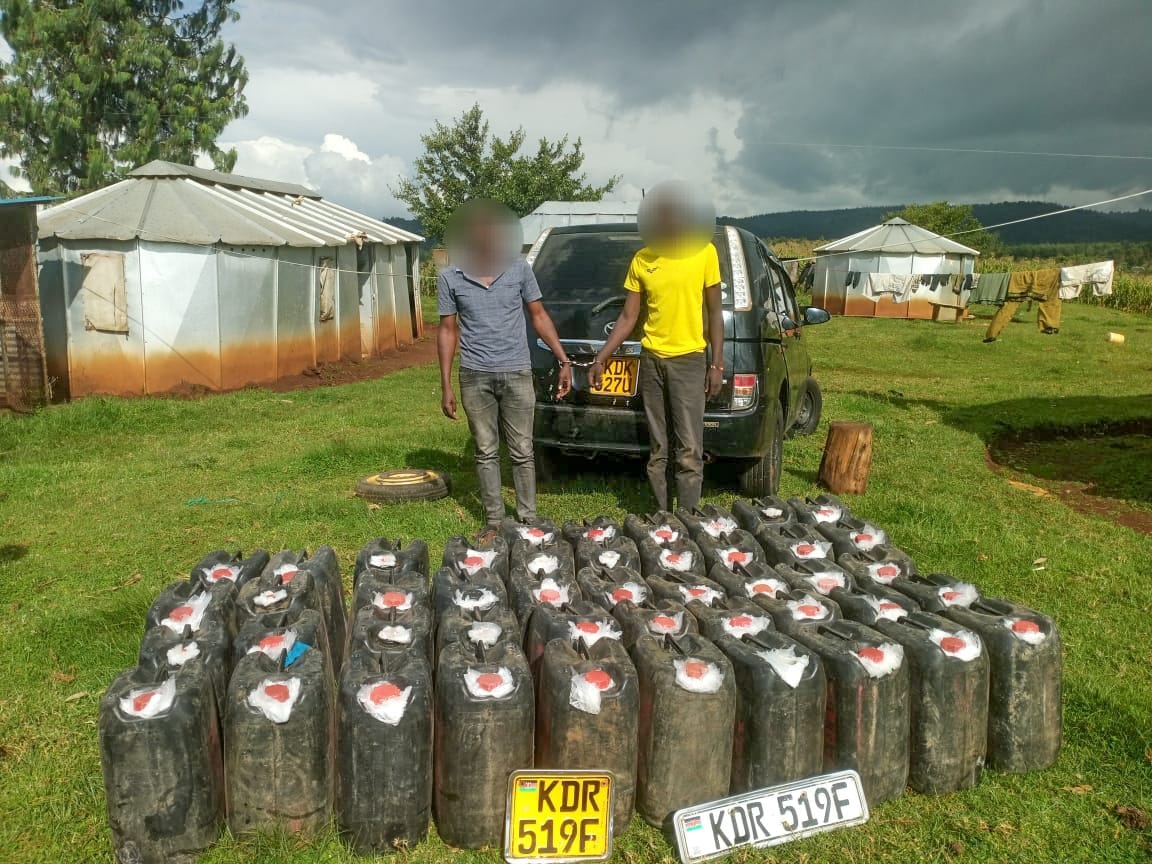
Police officers in Uasin Gishu County have made a significant breakthrough in the fight against illegal alcohol distribution, seizing 1,380 liters of illicit ethanol during a routine traffic stop. The operation, which took place yesterday afternoon near Nakuru, has resulted in two arrests and highlights ongoing efforts to combat the production and distribution of dangerous alcoholic substances across Kenya.
The Interception Operation
Suspicious Vehicle Leads to Major Discovery
At approximately 3:00 p.m. yesterday, National Police Service officers conducting routine patrols intercepted a suspicious vehicle traveling towards Nakuru in Uasin Gishu County. What initially appeared to be a standard traffic stop quickly escalated into a major law enforcement operation when officers discovered irregularities with the vehicle’s documentation.
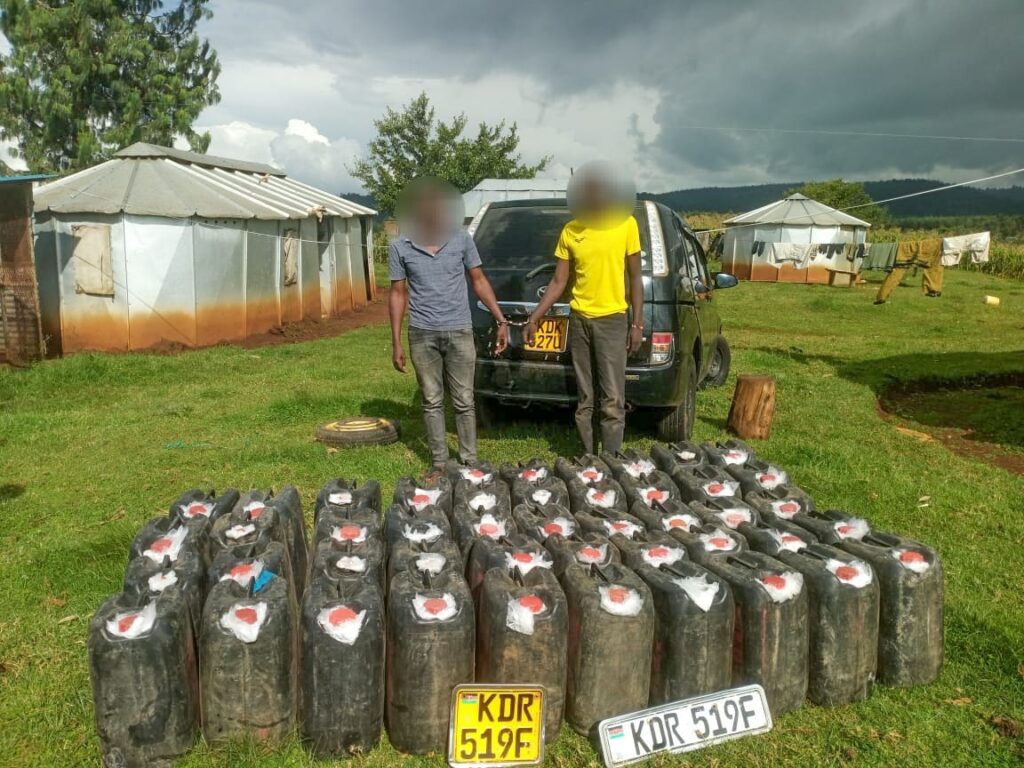
The intercepted vehicle was found to be displaying two separate number plates, immediately raising red flags for the investigating officers. This discovery prompted a thorough inspection of the vehicle and its contents, leading to the uncovering of a substantial cache of illegal alcohol.
Substantial Alcohol Cache Discovered
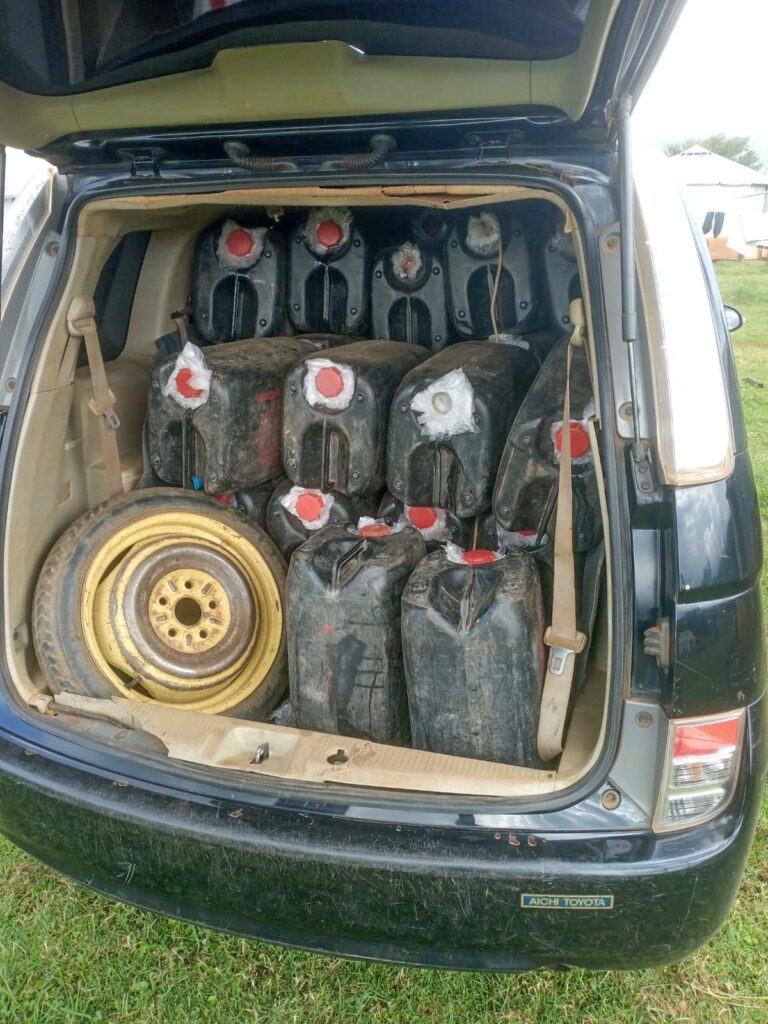
Upon detailed inspection, officers recovered 46 jerricans from the vehicle, each containing 30 liters of ethanol, totaling 1,380 liters of the illegal substance. The sheer volume of the seizure indicates this was likely part of a larger distribution network operating in the region.
The discovery represents one of the more significant ethanol seizures in recent months for Uasin Gishu County authorities. Each jerrican was carefully catalogued and documented as evidence for the ongoing investigation into the illegal alcohol trade in the area.
Legal Action and Custody
Arrests Made at Scene
Two individuals found in possession of the vehicle and its illegal cargo were immediately arrested at the scene. The suspects are currently being held in police custody while authorities prepare formal charges against them. They are expected to face arraignment in court pending the completion of the investigation.
The National Police Service has confirmed that both suspects remain in custody as investigations continue. Their identities have not been released pending formal charges, in accordance with standard police procedures for ongoing investigations.
Vehicle Impounded for Investigation
In addition to the arrests, police have impounded the vehicle used in the transportation of the illegal ethanol. The vehicle will undergo forensic examination as part of the broader investigation to determine the extent of the operation and identify any additional suspects or accomplices.
The impoundment of the vehicle also serves as a deterrent to others who might be involved in similar illegal activities, demonstrating the serious consequences of engaging in the illicit alcohol trade.
Background on Illicit Alcohol in Kenya
Growing Concern for Public Health
The production and distribution of illicit alcohol has become a significant public health concern across Kenya. Unregulated ethanol and other illegal alcoholic beverages pose serious health risks to consumers, often containing dangerous chemicals and impurities that can cause blindness, organ failure, and death.
Health authorities have repeatedly warned about the dangers of consuming unregulated alcohol, particularly ethanol that has not undergone proper distillation and safety testing. The lack of quality control in illegal alcohol production makes these substances extremely hazardous to human health.
Economic Impact on Legal Industry
The illegal alcohol trade also has substantial economic implications for Kenya’s legitimate alcohol industry. Licensed producers and distributors lose significant revenue to illegal operations that avoid taxation and regulatory compliance, creating an unfair competitive disadvantage.
Government revenue is similarly affected, as illegal alcohol operations circumvent the taxation system that funds public services and development projects. This economic drain undermines efforts to build sustainable economic growth in affected regions.
Law Enforcement Response
Nationwide Anti-Illicit Alcohol Campaign
The seizure in Uasin Gishu County is part of a broader nationwide campaign by the National Police Service to combat the production, distribution, and consumption of illicit alcoholic substances. This coordinated effort involves multiple law enforcement agencies working together to dismantle illegal alcohol networks.
Recent months have seen increased police activity targeting illegal alcohol operations across various counties. The authorities have adopted a multi-pronged approach that includes routine traffic stops, raids on suspected production facilities, and intelligence-gathering operations to identify key players in the illegal alcohol trade.
Community Cooperation Essential
Law enforcement officials emphasize the importance of community cooperation in identifying and reporting suspected illegal alcohol activities. Local communities often have valuable information about suspicious operations in their areas, and their assistance is crucial for successful enforcement efforts.
The police have established reporting mechanisms that allow citizens to anonymously report suspected illegal alcohol production or distribution activities. This community-based approach has proven effective in several recent operations across the country.
Public Health Implications
Health Risks of Unregulated Alcohol
Medical professionals continue to warn about the severe health consequences associated with consuming illicit alcohol. Unregulated ethanol often contains methanol and other toxic substances that can cause immediate health crises and long-term medical complications.
The World Health Organization has identified illicit alcohol as a significant public health threat in many developing countries, including Kenya. The organization recommends strict enforcement of alcohol regulations and public education campaigns to address the problem effectively.
Prevention Through Education
Health authorities are working alongside law enforcement to educate communities about the dangers of illicit alcohol consumption. These educational programs target high-risk areas where illegal alcohol is commonly produced and consumed.
The educational initiatives focus on helping communities identify dangerous alcoholic products and understand the health risks associated with their consumption. These programs have shown promise in reducing demand for illegal alcohol in several pilot communities.

Future Enforcement Efforts
Continued Vigilance Required
The National Police Service has indicated that efforts to combat illicit alcohol production and distribution will continue with increased intensity. The success of operations like the Uasin Gishu seizure demonstrates the effectiveness of coordinated law enforcement efforts.
Future enforcement strategies will likely include enhanced surveillance of known trafficking routes, improved intelligence sharing between different police units, and stronger penalties for those caught engaging in illegal alcohol activities.
Technology and Modern Policing
Law enforcement agencies are increasingly utilizing modern technology and investigative techniques to identify and disrupt illegal alcohol networks. This includes the use of data analysis, surveillance technology, and forensic investigation methods to build stronger cases against suspects.
The integration of technology into anti-illicit alcohol operations has already shown promising results in several regions, and authorities plan to expand these capabilities further.
Conclusion
The seizure of 1,380 liters of illicit ethanol in Uasin Gishu County represents a significant victory in the ongoing battle against illegal alcohol production and distribution in Kenya. The successful operation demonstrates the effectiveness of routine police patrols and the importance of thorough vehicle inspections in identifying criminal activities.
As the two suspects await formal charges and the investigation continues, this case serves as a clear warning to others involved in the illegal alcohol trade. The National Police Service’s commitment to combating illicit substances remains unwavering, with continued operations planned to protect public health and safety.
The broader implications of this seizure extend beyond the immediate arrests, highlighting the need for sustained enforcement efforts, community cooperation, and public education to address the illegal alcohol problem comprehensively. Only through coordinated action involving law enforcement, health authorities, and local communities can Kenya effectively combat the production and distribution of dangerous illicit alcohol.