DCI Detectives Dismantle Mobile Money Fraud Syndicate Operating in Nairobi
The Directorate of Criminal Investigations has arrested a father-and-son duo accused of orchestrating a sophisticated M-Pesa fraud scheme that defrauded unsuspecting mobile money operators in Nairobi’s Gikomba market. The suspects, 49-year-old Peter Mwendwa Musyoka and his 23-year-old son Dennis Musyoka, were apprehended following a meticulous investigation that traced digital footprints linking them to a fraud worth Sh236,000.
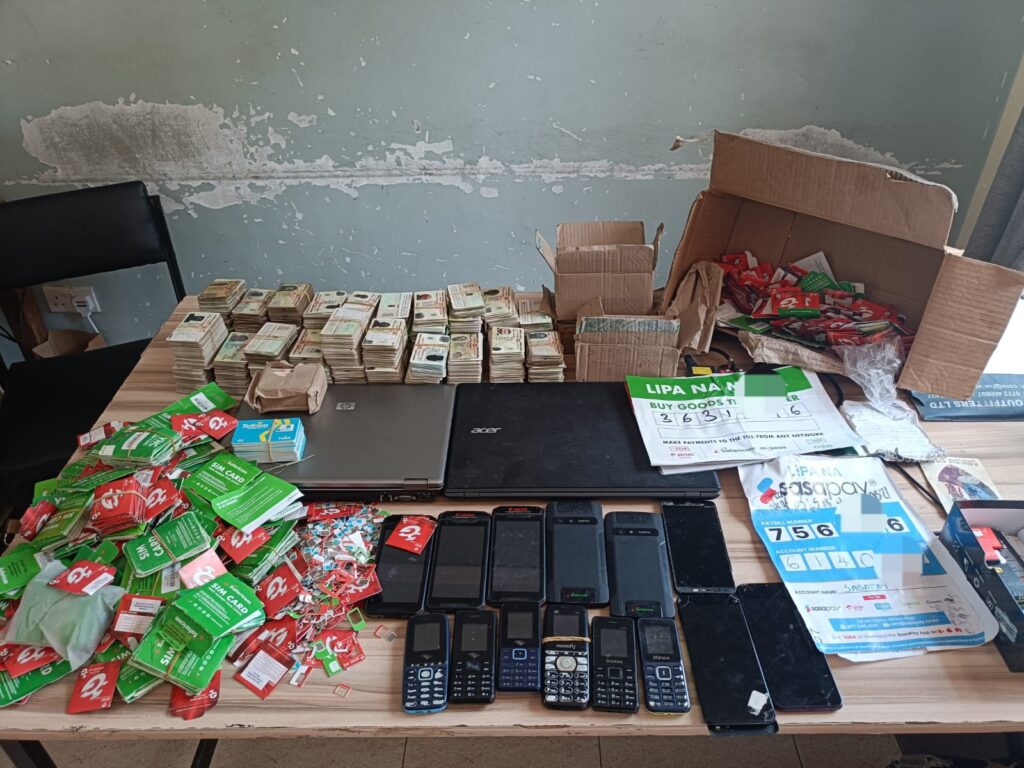
The arrest, which took place at the suspects’ hideout in Komarock’s Nyama Villa estate, represents a significant breakthrough in combating mobile money fraud in Kenya. Shauri Moyo detectives recovered substantial evidence during the operation, including multiple SIM cards, identification documents, and electronic devices believed to have been instrumental in executing the fraudulent scheme.
The Gikomba Market Fraud Incident
The investigation began following a reported M-Pesa fraud incident that occurred on September 2, 2025, at Gikomba market, one of Nairobi’s busiest commercial centers. The market, known for its vibrant trading activities, has increasingly become a target for criminals exploiting the widespread use of mobile money services.
According to DCI reports, the fraud involved sophisticated manipulation of M-Pesa transactions targeting mobile money agents operating in the market. The suspects allegedly used technical knowledge of mobile money systems to execute transactions that appeared legitimate but ultimately defrauded the operators of Sh236,000.
The incident prompted immediate action from law enforcement, with Shauri Moyo detectives launching an investigation to track down the perpetrators. Digital forensics played a crucial role in identifying and locating the suspects, demonstrating the increasing importance of technology in modern criminal investigations.
The Arrest Operation in Komarock

Following weeks of careful investigation and surveillance, detectives traced the suspects to their residence in Komarock’s Nyama Villa estate. The area, a residential neighborhood in Nairobi’s eastlands region, served as the operational base for the fraudulent activities.
The arrest operation was conducted with precision, ensuring that critical evidence was preserved for prosecution. Law enforcement officials executed the operation during a time when both suspects were present at the hideout, preventing any possibility of escape or evidence destruction.
The successful apprehension of both father and son simultaneously proved crucial for the investigation, as it prevented either suspect from alerting other potential members of the syndicate or tampering with evidence stored at other locations.
Evidence Recovered from the Crime Scene
During the search of the suspects’ residence, detectives made significant discoveries that shed light on the scale and sophistication of the operation. The recovered items painted a picture of a well-organized fraud scheme with multiple layers of complexity.
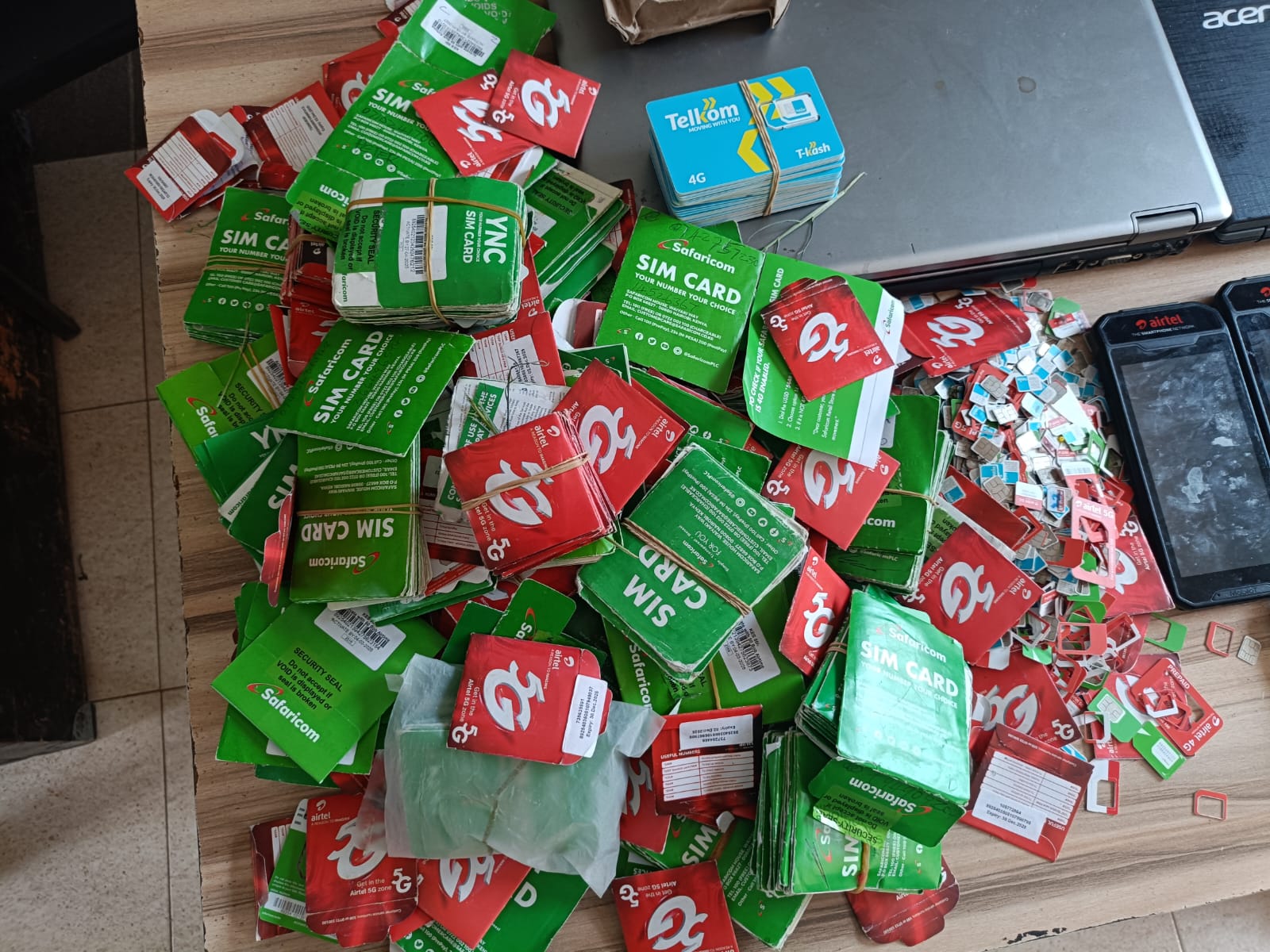
Investigators found both used and unused SIM cards from major Kenyan telecommunications providers, including Safaricom, Airtel, and Telkom. These SIM cards are believed to have been used to create multiple M-Pesa accounts, making it difficult for mobile money operators to identify fraudulent patterns.
The detectives also recovered identification cards and various agent and paybill numbers linked to the three major telecommunications companies operating in Kenya. These materials suggest that the suspects had created a network of false identities to facilitate their fraudulent operations.
Electronic equipment, including laptops and smartphones, was seized from the premises. Forensic analysis of these devices is expected to reveal the technical methods used to execute the fraud and may provide leads to other victims or accomplices.
The Father-Son Criminal Partnership
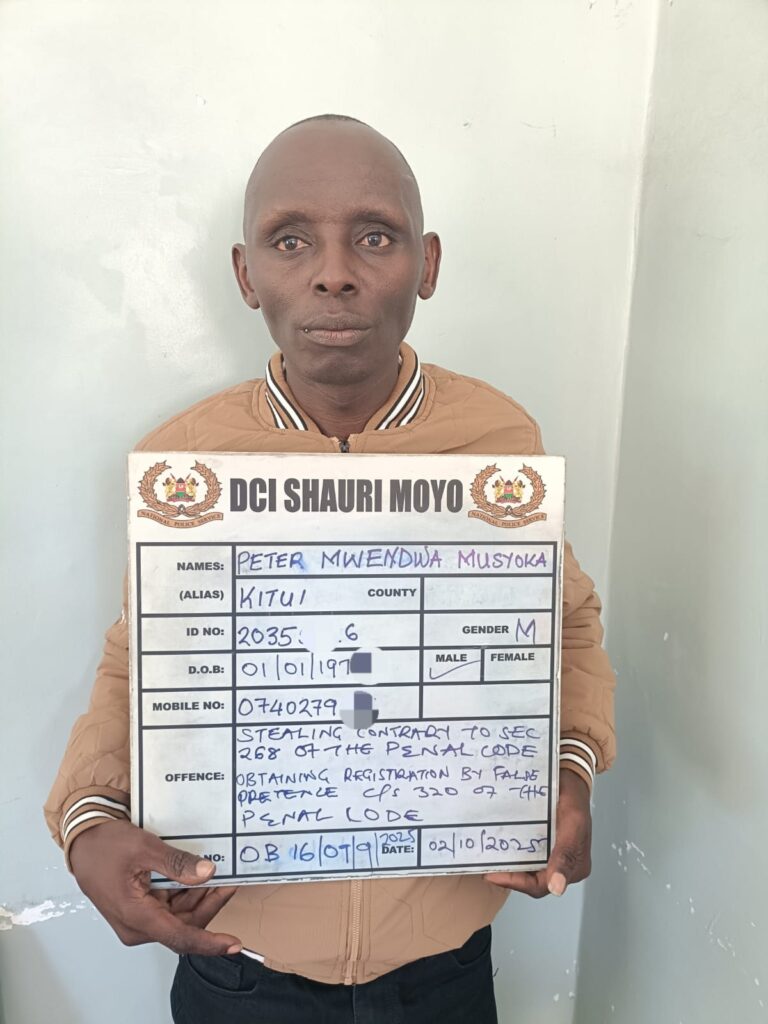
Investigation findings revealed a disturbing family dynamic in which the older suspect allegedly groomed his son into criminal activity. According to DCI reports, the father served as the mastermind of the operation, introducing his young adult son to the illicit trade.
This pattern of intergenerational criminal mentorship raises concerns about how criminal knowledge and methods are transmitted within families. The 49-year-old father allegedly taught his 23-year-old son the techniques for conning unsuspecting M-Pesa operators, effectively grooming him into a life of crime.
The age difference between the suspects suggests that the father had likely been involved in similar fraudulent activities for some time before bringing his son into the scheme. This experience may have helped the duo refine their methods and avoid detection for an extended period.
The involvement of a young person in such schemes highlights the vulnerability of youth to criminal influence, particularly when it comes from trusted family members. It also demonstrates how organized fraud can operate within family units, making detection more challenging for law enforcement.
Links to Broader Criminal Syndicate

The DCI’s statement indicates that the arrested father and son are not operating in isolation but form part of a broader syndicate targeting mobile money dealers across Nairobi. This revelation suggests that M-Pesa fraud in the capital city is more organized and extensive than individual isolated incidents might suggest.
The existence of a larger syndicate implies coordination among multiple fraudsters who may be sharing techniques, resources, and information about vulnerable targets. Such organized criminal networks pose a more significant threat to the mobile money ecosystem than individual fraudsters operating independently.
Investigators believe that other members of this syndicate remain at large and continue to target mobile money operators in various parts of Nairobi. The ongoing investigation aims to identify and apprehend these additional suspects to dismantle the entire criminal network.https://x.com/DCI_Kenya/status/1973717858623348918?t=3ebmIZjVHWbgl6H7cl5g_Q&s=19
The sophistication of the operation, including the use of multiple SIM cards, fake identities, and technical equipment, suggests that the syndicate has access to significant resources and technical expertise. This level of organization requires coordinated effort from law enforcement to combat effectively.
Current Status and Ongoing Investigation
Both Peter Mwendwa Musyoka and Dennis Musyoka remain in police custody as of the latest reports. The suspects are undergoing processing pending formal arraignment in court, where they will face charges related to fraud, conspiracy, and other relevant offenses under Kenyan law.
The ongoing processing of the suspects allows investigators additional time to complete forensic analysis of the recovered electronic devices and to build a comprehensive case for prosecution. This period is crucial for ensuring that all evidence is properly documented and preserved for court proceedings.
Detectives continue their pursuit of other members of the syndicate identified through the investigation. The arrest of the father-son duo has provided valuable leads that investigators are following to track down additional suspects and prevent further fraudulent activities.
The DCI has indicated that the investigation remains active, with officers working to map the full extent of the syndicate’s operations across Nairobi. This comprehensive approach aims not only to prosecute those already arrested but also to prevent future incidents by dismantling the entire criminal network.
The Growing Challenge of M-Pesa Fraud in Kenya
The incident highlights the persistent challenge of mobile money fraud in Kenya, despite technological safeguards and regulatory measures. M-Pesa, launched in 2007, has revolutionized financial services in Kenya but has also created new opportunities for criminal exploitation.
The widespread adoption of mobile money services has made Kenya a global leader in financial technology innovation. However, this success has attracted criminals who continuously develop new methods to exploit system vulnerabilities and deceive unsuspecting users and agents.
Mobile money fraud takes various forms, including SIM swap fraud, fake payment notifications, phishing schemes, and technical manipulation of transaction processes. Fraudsters constantly adapt their methods to circumvent security measures implemented by service providers and law enforcement agencies.
The impact of such fraud extends beyond immediate financial losses. It undermines public confidence in mobile money systems and affects the livelihoods of small-scale agents who often operate with limited capital margins. A single significant fraud incident can devastate an agent’s business and discourage others from participating in the mobile money ecosystem.
Implications for Mobile Money Security
This case underscores the need for enhanced security measures and awareness among mobile money operators and users. Service providers must continue investing in advanced fraud detection systems that can identify suspicious patterns before transactions are completed.
Mobile money agents require regular training on recognizing and preventing fraud attempts. Many agents, particularly those operating in busy markets like Gikomba, process numerous transactions daily and may be vulnerable to sophisticated fraud schemes that appear legitimate on the surface.
The telecommunications companies operating M-Pesa and similar services bear responsibility for implementing robust verification systems that prevent the creation of fraudulent accounts using false identification. The recovery of multiple SIM cards and ID cards in this case suggests potential gaps in registration verification processes.
Collaboration between law enforcement, telecommunications providers, and regulatory authorities is essential for creating a comprehensive response to mobile money fraud. This includes sharing intelligence, coordinating investigations, and developing policies that balance accessibility with security.
Conclusion
The arrest of Peter Mwendwa Musyoka and his son Dennis Musyoka marks a significant victory in the fight against mobile money fraud in Nairobi. However, it also reveals the organized nature of such criminal activities and the ongoing challenges facing Kenya’s mobile money ecosystem.
As detectives continue their investigation into the broader syndicate, the case serves as a reminder of the importance of vigilance among mobile money users and operators. The sophisticated methods employed by these fraudsters demonstrate that security awareness and technological safeguards must evolve continuously to stay ahead of criminal innovation.
The successful use of digital forensics to track and apprehend the suspects provides hope that law enforcement is developing the capabilities necessary to combat modern financial crimes. As the investigation unfolds and additional suspects are pursued, the full extent of this fraud syndicate’s operations will become clearer, potentially leading to further arrests and enhanced security measures across the mobile money sector.
For more latest news and updates on crime and investigations, visit our homepage. To learn more about our publication, check our About Us page, or contact us with your feedback and story tips.