

Liverpool captain Virgil van Dijk has issued a frank assessment of his team’s current form, emphasizing the urgent need for the Reds to “find consistency” as they pursue silverware across multiple competitions. The Dutch defender’s comments come at a pivotal moment in the season, highlighting the challenges facing one of English football’s most storied clubs as they balance domestic and European ambitions.
Captain’s Concern: The Quest for Stability
Virgil van Dijk, who has been instrumental in Liverpool’s defensive organization since joining the club, has identified consistency as the primary area requiring immediate improvement. The 33-year-old center-back’s assessment reflects a broader concern within the Liverpool camp about the team’s ability to maintain high performance levels across consecutive matches.
Speaking candidly about the team’s recent performances, van Dijk acknowledged that while Liverpool has demonstrated their quality in individual matches, the lack of sustained excellence has prevented them from establishing the commanding position they desire in their competitions. His remarks underscore the fine margins that separate success from disappointment at the highest level of professional football.
The timing of van Dijk’s comments is particularly significant, coming during a period when Liverpool faces a congested fixture schedule that demands both physical resilience and mental fortitude. The captain’s words serve as both an honest appraisal of current circumstances and a rallying cry for his teammates.
Analyzing Liverpool’s Inconsistent Form
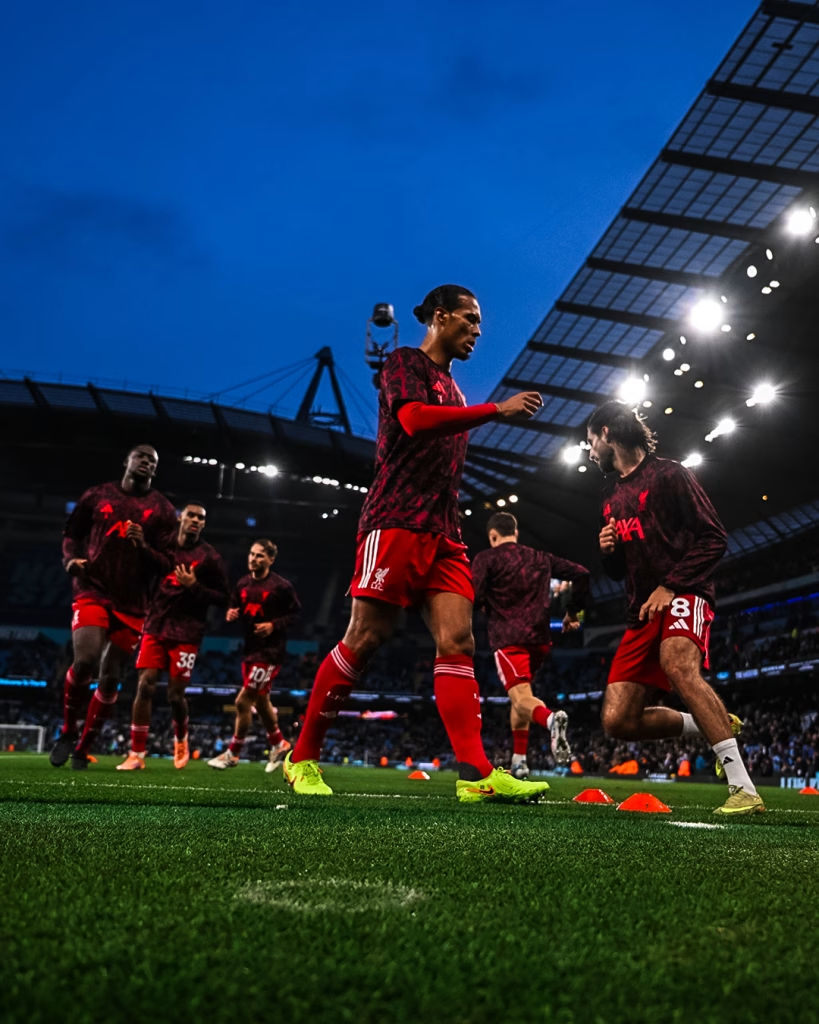
Liverpool’s season has been characterized by flashes of brilliance interspersed with performances that have fallen short of the standards set during the club’s most successful campaigns. The Reds have shown they can compete with and defeat top-tier opposition, yet have also dropped points in matches where they were expected to dominate.
This pattern of inconsistency has manifested in various ways throughout the campaign. Defensive lapses have occasionally undermined solid team performances, while attacking prowess has fluctuated between devastating effectiveness and frustrating sterility. The inability to string together consecutive victories has prevented Liverpool from building the momentum necessary for sustained title challenges.
Statistical analysis of Liverpool’s recent form reveals the substance behind van Dijk’s concerns. The team’s performance metrics show significant variation from match to match, with defensive solidity and attacking output demonstrating notable fluctuation. Such inconsistency makes it difficult for the coaching staff to identify and address specific tactical or personnel issues.
The Role of Leadership in Demanding Excellence
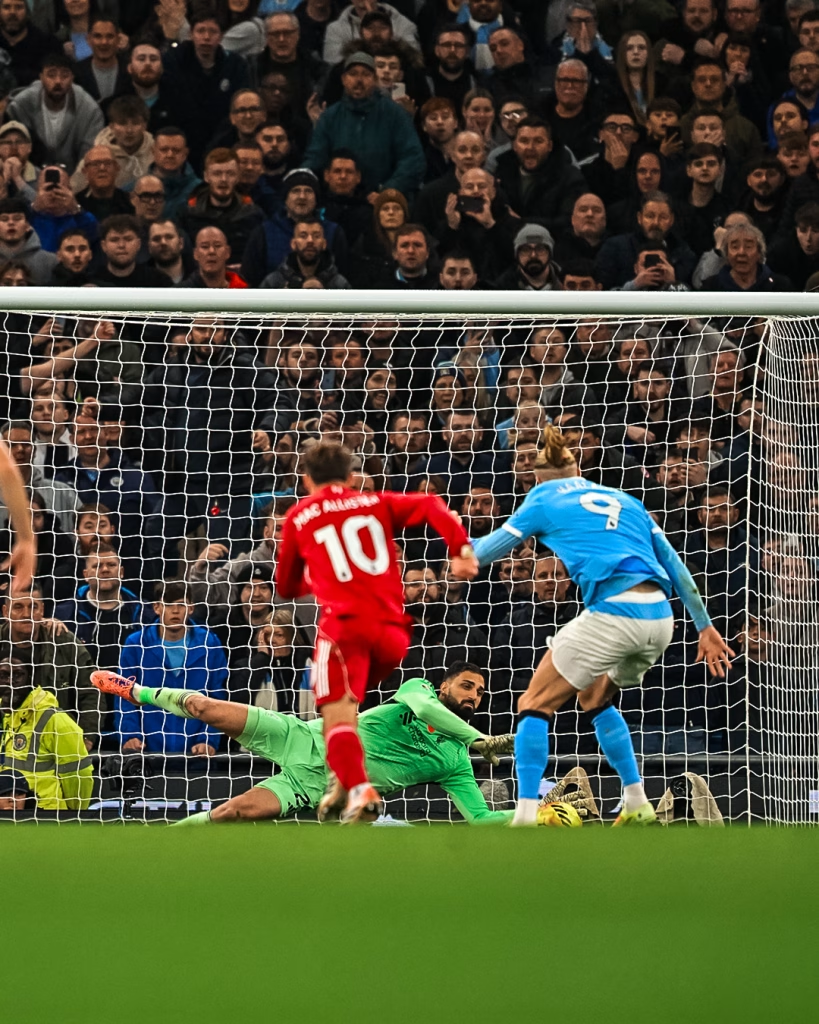
As Liverpool’s captain and defensive leader, van Dijk’s public acknowledgment of the consistency issue demonstrates strong leadership qualities. By addressing the problem directly rather than deflecting criticism, he sets a professional standard for accountability within the squad.
Van Dijk’s leadership extends beyond words, with his performances on the pitch continuing to set the benchmark for his teammates. Despite occasional team struggles, the Dutch international has maintained high personal standards, organizing the defensive line and providing the composure that has defined his Liverpool career.
The captain’s willingness to speak openly about team shortcomings also reflects the culture within Liverpool’s dressing room, where honest self-assessment is valued as a pathway to improvement. This approach has historically served the club well, enabling them to identify and rectify problems before they become entrenched.
Tactical Considerations and Squad Management
Liverpool’s consistency challenges can be partially attributed to the tactical demands placed upon modern elite footballers. The high-intensity pressing system that has become synonymous with the club’s recent identity requires exceptional physical conditioning and perfect synchronization among all 11 players.
When any component of this system falters—whether through fatigue, injury, or momentary concentration lapses—the entire structure can become vulnerable. This explains why Liverpool’s performances can vary so dramatically, as the difference between executing the system at 95% versus 100% efficiency can be the difference between victory and defeat.
Squad rotation, necessitated by the demanding fixture schedule, has also contributed to inconsistency. While Liverpool possesses quality depth in most positions, the subtle understanding and partnerships that develop through consistent selection cannot be easily replicated when personnel changes are required.
The Competitive Landscape
Van Dijk’s call for consistency comes against the backdrop of an intensely competitive Premier League season. The margins for error have never been smaller, with multiple clubs possessing the quality to compete for top honors. In such an environment, consistency often proves more valuable than occasional excellence.
Liverpool’s rivals have demonstrated varying degrees of consistency themselves, creating opportunities for teams that can assemble winning runs. The captain’s recognition of this dynamic suggests an understanding that addressing the consistency issue could be decisive in determining the season’s outcome.
European competition adds another layer of complexity to Liverpool’s campaign. Balancing domestic and continental commitments while maintaining consistent performance levels represents one of football’s greatest challenges, requiring careful management of physical and mental resources.
Historical Context and Expectations
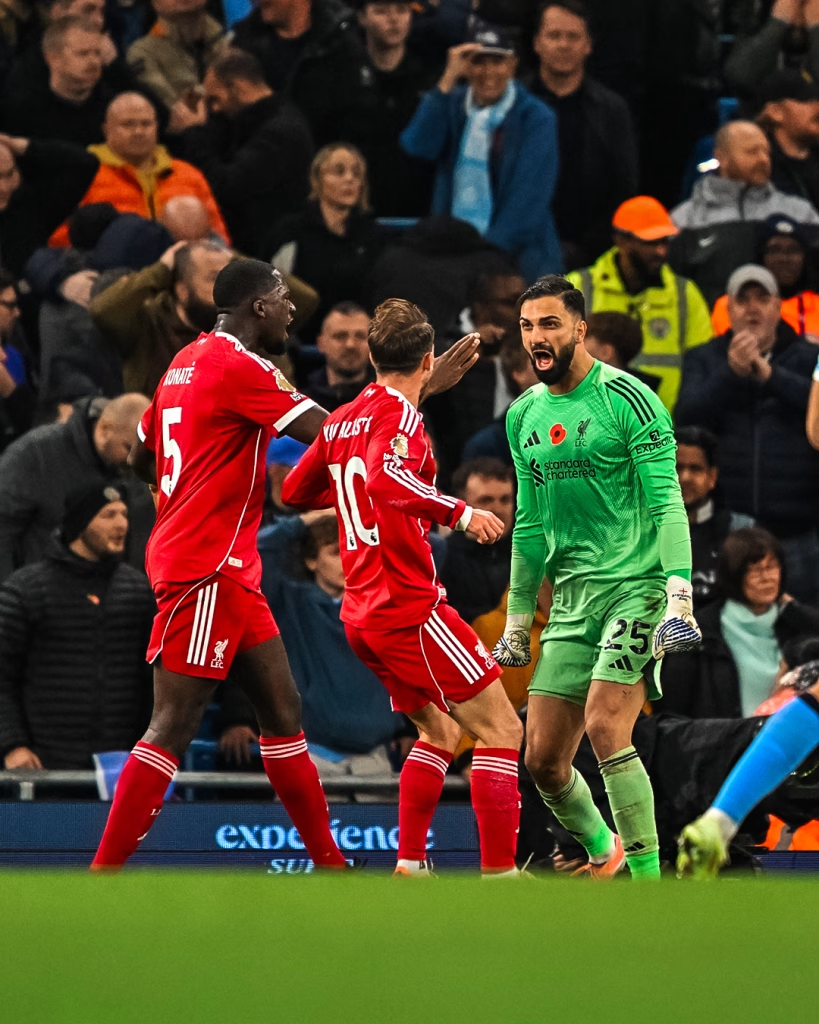
Liverpool’s illustrious history creates heightened expectations for current players. The club’s supporters, accustomed to success during recent seasons, naturally demand the consistency that characterizes championship-winning campaigns. Van Dijk’s comments acknowledge these expectations while being realistic about current challenges.
Previous Liverpool teams have demonstrated that consistency can be developed and refined throughout a season. Some of the club’s most successful campaigns began with similar challenges before the team found its rhythm and maintained it through crucial periods.
The comparison with past seasons provides both encouragement and a roadmap for improvement. Liverpool’s coaching staff can draw upon successful precedents while adapting strategies to address the specific circumstances of the current campaign.
Path Forward: Building Sustainable Success
Addressing the consistency issue requires a multifaceted approach encompassing tactical refinement, physical conditioning, and psychological preparation. Liverpool’s coaching staff must work to minimize the performance variance that has characterized the season thus far.
Individual player development remains crucial, with each squad member needing to elevate their minimum performance level. When every player consistently delivers near their peak capability, team performance naturally stabilizes and improves.
Team cohesion and understanding also play vital roles in achieving consistency. The more time players spend working together in specific partnerships and formations, the more instinctive and reliable their interactions become during match situations.
Implications for the Season Ahead
The remainder of Liverpool’s season will likely be defined by their ability to heed van Dijk’s call for consistency. With multiple competitions still in play, the team that emerges from this challenging period could yet salvage a successful campaign.
Key fixtures approaching on the calendar will provide opportunities to demonstrate improved consistency. String together positive results during this crucial period, and Liverpool could build the momentum necessary to compete for silverware.
The captain’s public acknowledgment of the issue may itself prove catalytic, focusing minds and reinforcing collective commitment to addressing identified weaknesses. Sometimes, honest assessment provides the foundation for meaningful improvement.
Conclusion: A Captain’s Challenge
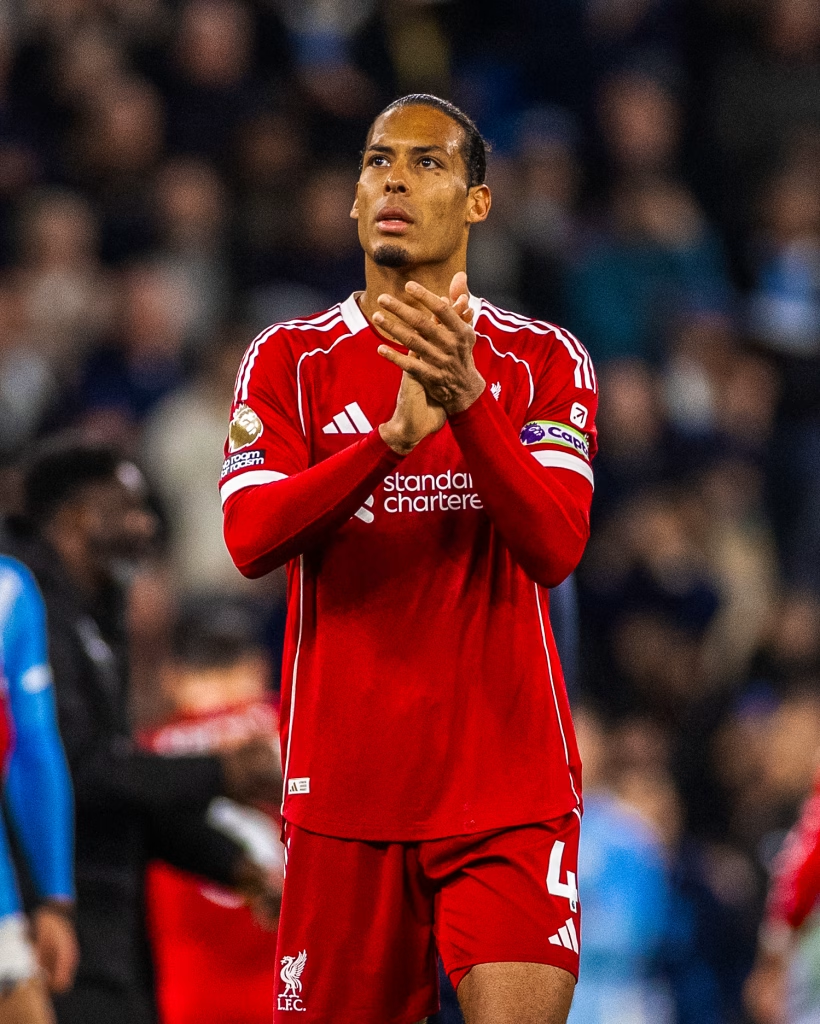
Virgil van Dijk’s call for Liverpool to find consistency represents more than routine post-match commentary. It stands as a challenge issued by the club’s captain to himself and his teammates, acknowledging current limitations while pointing toward necessary improvements.
Whether Liverpool can transform this honest assessment into tangible on-field improvement will determine the success of their season. The talent within the squad is undeniable, but talent alone proves insufficient without the consistency that transforms potential into achievement.
As the season progresses, van Dijk’s words will be measured against Liverpool’s performances. The captain has identified the challenge; now comes the crucial work of meeting it. For Liverpool supporters and neutral observers alike, watching whether the Reds can answer their captain’s call will provide one of the season’s compelling narratives.


