Major Initiatives Bring Clean Power to Underserved Communities Across the Nation
Kenya Power and Lighting Company is transforming the country’s energy landscape through ambitious electrification programs that prioritize renewable sources and universal access. The utility provider’s Last Mile Connectivity, Hybridisation, and Kenya Off-Grid Solar Access Project (KOSAP) initiatives are bringing clean, reliable electricity to homes, schools, and healthcare facilities across previously underserved regions. With over 90% of its energy mix derived from renewable sources, Kenya Power is demonstrating that sustainable development and widespread electrification can advance together.
Kenya’s Renewable Energy Achievement

Kenya has established itself as a continental leader in renewable energy generation, with one of the highest proportions of clean power in Africa. The country’s energy portfolio includes geothermal, hydroelectric, wind, and solar sources that collectively provide more than 90% of electricity fed into the national grid.
Geothermal facilities in the Rift Valley region generate substantial baseload power, with the Olkaria complex serving as a major contributor. Hydroelectric plants along Kenya’s rivers have long provided consistent generation capacity. More recently, wind farms in Turkana County have added significant renewable capacity to the national system.
This renewable energy dominance positions Kenya favorably on the global stage. The country surpasses many developed nations in clean energy percentage while reducing dependence on imported fossil fuels. This strategy supports stable electricity pricing and aligns with international climate commitments.
Last Mile Connectivity Program

The Last Mile Connectivity initiative represents Kenya Power’s comprehensive effort to extend electricity infrastructure to communities that have historically lacked grid access. This program focuses on connecting households, public institutions, and businesses in rural and peri-urban areas where traditional grid extension has been economically challenging.
Kenya Power has deployed extensive distribution networks under this program, bringing power lines within reach of millions of Kenyans. The initiative employs cost-effective technologies and simplified connection procedures to make electricity access more affordable for low-income households.
Schools benefit significantly from Last Mile connections. Electricity enables computer labs, digital learning resources, and extended study hours. Teachers can utilize modern educational tools that enhance learning outcomes for students in remote areas.
Healthcare facilities gain critical capabilities through reliable power access. Medical centers can now refrigerate vaccines and medicines, operate diagnostic equipment, and provide emergency services after dark. This infrastructure improvement directly impacts maternal and child health outcomes across connected communities.
Small businesses experience transformation through electricity access. Shop owners can extend operating hours, use power tools that increase productivity, and adopt refrigeration for perishable goods. These capabilities create employment opportunities and stimulate local economic development.
For households, electricity access means safe lighting that replaces dangerous kerosene lamps, mobile phone charging capacity, and opportunities for income-generating activities. Street lighting improves community security while modern appliances enhance quality of life.
Hybridisation Strategy
Kenya Power’s Hybridisation approach combines multiple renewable energy sources to create more reliable and efficient power systems. This strategy recognizes that different renewable technologies have complementary generation patterns that can be optimized for consistent supply.
Solar generation peaks during daylight hours while wind power often increases during evening and night periods. Geothermal provides steady baseload capacity throughout the day. By integrating these sources, Kenya Power maintains more consistent power delivery while maximizing renewable energy utilization.
The hybridisation concept extends to off-grid systems in remote areas. Mini-grids that combine solar panels, wind turbines, and battery storage provide reliable community power where extending the main transmission network remains impractical. These localized systems maintain Kenya’s renewable energy commitment while serving dispersed populations.
Advanced control systems and monitoring technologies optimize hybrid installations. Kenya Power’s technical teams analyze generation patterns and adjust system operations to maximize efficiency. This data-driven approach improves reliability and helps predict maintenance requirements before equipment failures occur.
Hybrid systems also reduce the need for diesel generator backup, cutting operational costs and emissions. Communities benefit from cleaner air quality and more stable power supply. The approach demonstrates that renewable energy can provide reliable service comparable to conventional fossil fuel systems.
KOSAP Implementation
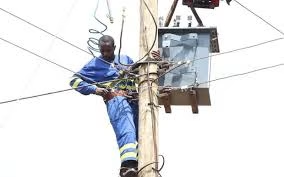
The Kenya Off-Grid Solar Access Project targets 14 counties in northern and northeastern regions where geographic challenges have limited conventional electrification. KOSAP brings comprehensive energy solutions to Turkana, Marsabit, Samburu, Isiolo, and other underserved counties through stand-alone solar systems and community installations.
This World Bank-supported initiative takes an integrated approach beyond simple equipment installation. KOSAP includes capacity building for local technicians who maintain solar systems, training for communities on safe electricity use, and support for productive applications that generate economic returns.
Households receive solar home systems that provide lighting, phone charging, and power for small appliances. These systems eliminate reliance on expensive and dangerous kerosene lamps while creating opportunities for evening study and home-based businesses.
Public facilities receive larger solar installations that support critical services. Schools gain electricity for lighting, computers, and educational media. Health centers can refrigerate vaccines and operate essential medical equipment. Community centers become hubs for social and economic activities enabled by reliable power.
Solar water pumping systems provide clean water access in arid regions where manual or diesel-powered pumping has been the norm. These installations reduce labor burden, particularly for women and children, while ensuring more consistent water availability for households and livestock.
KOSAP addresses gender considerations by recognizing how energy poverty disproportionately affects women and girls. Reliable lighting enables evening study for girls who often handle daytime household responsibilities. Clean cooking solutions reduce indoor air pollution that primarily impacts women. Time saved from firewood collection creates opportunities for education and income generation.
Economic Impact
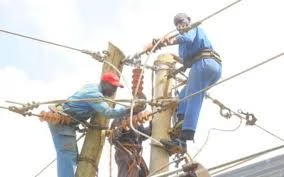
Electrification initiatives drive measurable economic development in connected communities. Businesses adopt new technologies that increase productivity and competitiveness. Agricultural enterprises utilize electric irrigation, cold storage, and processing equipment that adds value to farm products and reduces post-harvest losses.
Market centers in newly electrified areas attract investment and expanded commercial activity. Entrepreneurs establish businesses that require reliable power, from welding shops to computer cafes. Employment opportunities increase as the local economy diversifies beyond traditional subsistence activities.
Access to electricity enables micro-enterprises that supplement household incomes. Tailoring businesses use electric sewing machines. Food vendors operate refrigeration for perishable products. Phone charging stations serve community members. These small businesses collectively transform local economic conditions.
Financial inclusion improves as electricity enables mobile money services and banking agents to operate in remote areas. Communities gain access to formal financial services that support savings, credit, and business development. This connectivity integrates previously isolated regions into the national economy.
Educational Advancement
Schools with reliable electricity demonstrate improved educational outcomes across multiple indicators. Students can study after sunset, particularly important for children who help with farm work during daylight hours. Libraries remain accessible during evening hours when students have free time.
Computer labs and internet connectivity expose students to digital learning resources and prepare them for technology-oriented careers. Educational software and online courses supplement teacher instruction, particularly in subjects where qualified teachers are scarce.
Teacher recruitment and retention improve in electrified schools. Qualified educators are more willing to serve in rural areas when schools offer modern facilities with reliable power. Teacher housing with electricity attracts and retains experienced professionals.
Science education benefits from equipment that requires electricity. Laboratory experiments become possible in schools that previously could only teach theoretical concepts. Practical skills development prepares students for technical careers and higher education opportunities.
Healthcare Improvements

Healthcare delivery transforms in facilities with reliable electricity. Vaccine refrigeration maintains cold chain integrity, essential for childhood immunization programs. Medications that require temperature control remain effective, improving treatment outcomes for chronic conditions.
Diagnostic capabilities expand with powered equipment. Laboratories can process samples and provide test results that inform treatment decisions. Ultrasound machines, ECG equipment, and other diagnostic tools become viable in rural facilities.
Emergency services extend to night hours when electricity provides adequate lighting. Medical staff can respond to obstetric emergencies, trauma cases, and acute illnesses regardless of time. This 24-hour capability reduces preventable mortality.
Communication systems connect rural health workers with specialist support and emergency coordination networks. Telemedicine consultations become possible, bringing expert medical knowledge to underserved areas. Patient records on electronic systems improve continuity of care and health system efficiency.
Environmental Benefits
The renewable energy focus delivers significant environmental benefits alongside electrification goals. Displacing kerosene lamps eliminates indoor air pollution that contributes to respiratory disease, particularly among children. Households enjoy cleaner air and reduced health risks.
Diesel generators that previously powered businesses and institutions are replaced by clean grid or solar electricity. This transition reduces local air pollution and greenhouse gas emissions while cutting operational costs for facilities.
Kenya’s renewable energy approach positions the nation as a model for sustainable development. The country demonstrates that economic progress and environmental stewardship can advance together rather than requiring tradeoffs between growth and conservation.
Forest conservation benefits as electricity reduces reliance on charcoal and firewood for lighting. Reduced pressure on forest resources supports biodiversity protection and watershed conservation that benefits agriculture and water security.
Challenges and Solutions

Kenya Power faces ongoing challenges in sustaining expanded electrification efforts. Remote area infrastructure requires substantial investment relative to the immediate customer base. Transmission losses over long distances affect system efficiency and economics.
Revenue collection in newly connected areas presents difficulties as communities adjust to electricity payments. Kenya Power develops flexible payment systems including mobile money integration and prepaid metering that accommodate varying income patterns.
Technical capacity building remains essential as the utility deploys increasingly sophisticated systems. Training programs for engineers and technicians ensure adequate expertise for system operation and maintenance. Partnerships with international organizations bring best practices and technology transfer.
Climate variability affects renewable generation, particularly hydroelectric output during drought periods. Diversification across geothermal, wind, and solar resources mitigates this risk. Energy storage and demand management systems provide additional flexibility to balance supply and consumption.
Future Developments
Kenya Power continues pursuing aggressive electrification targets aligned with national development goals. Plans include further expansion of successful programs and innovative approaches to reaching remaining unelectrified populations.
Smart grid technologies offer opportunities for improved service delivery. Advanced metering infrastructure enables better load management and reduces technical losses. Distribution automation improves reliability and speeds restoration after outages.
Regional integration presents growth opportunities as Kenya becomes a net power exporter. Cross-border transmission projects can leverage the country’s renewable energy advantage while generating revenue for domestic infrastructure investment.
Battery energy storage systems will increasingly support renewable integration. Storage enables time-shifting of solar generation to evening peak demand periods. This capability enhances grid stability while maximizing renewable energy utilization.
Electric mobility adoption creates new opportunities and challenges for the utility. Kenya Power is preparing infrastructure for electric vehicle charging while managing the additional load these vehicles will add to distribution systems.
Conclusion

Kenya Power’s comprehensive electrification strategy through Last Mile Connectivity, Hybridisation, and KOSAP demonstrates how renewable energy and universal access can advance together. The utility’s achievement of over 90% renewable energy while expanding service to underserved communities provides a model for sustainable development that other nations can adapt.
These initiatives deliver transformative benefits across education, healthcare, economic development, and environmental protection. As programs continue scaling, millions more Kenyans will gain access to clean, reliable electricity that enables opportunity and improves quality of life.
The success positions Kenya as a continental leader in renewable energy adoption and proves that developing nations need not compromise environmental goals to achieve electrification. Through continued investment, innovation, and commitment to sustainability, Kenya Power is illuminating a path toward an equitable energy future.